
Source-or-err
The truth doesn’t hurt, it’s resisting the truth that hurts.

Someone asked me the other day where I get ideas for my writing, and I replied that I get leads sent to me and look into them. That was only partially true.
Although I get sent story leads and sometimes come up with story ideas, the biggest sources of story leads come from hearing or reading other people’s claims and rumors. Then I validate or falsify, depending on what the source data reveals.
Here’s how it works: someone says they heard something, usually somewhat scandalous or shocking, and then claims it is true when they share it. People don’t check but forward it to others because it gets attention and gives something for gossip.
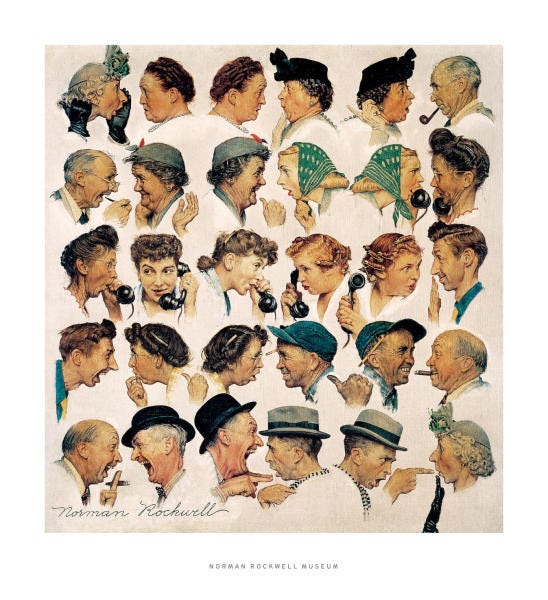
There’s always a grain of truth to these claims which keeps them going.
While true that not all of a story can be documented or have artifacts, even with the most sensational claims there should be at least some evidence or witnesses.
As Carl Sagan famously said, “extraordinary claims require extraordinary evidence.”
On top of that, manipulative people, grifters, con artists, small-town gossips, and people chasing clout thrive on chaos, controversy, and lies as it gives them currency in the form of attention. It’s negative attention to be sure – societal consequences be damned – but people will pay attention because the news usually is alarming and it sets our inner warning bells off.
The news media is largely guilty, and unfortunately, it tends to attract these types to the industry as they’re good at creating enough controversy to get clicks and eyeballs.
That’s not to say people don’t make mistakes and report the wrong things. Hopefully, they issue a correction when they get the right facts. The main difference is intent.
That’s not to say the false report isn’t already circulating and morphing, causing damage to a person’s or organization’s reputation. That’s why we should be careful what we publish about others.
That’s also why “Thou shalt not bear false witness against thy neighbor,” is a commandment. Religious views aside, honesty keeps everyone’s integrity together.
Speaking of religion, I was in a group text where someone spoke ill of a church group in Waco called Mercy Culture. I wrote a story for Texas Scorecard about their pro-life march not long ago and am somewhat familiar with this group. But I’d not heard of any controversies here in Waco.
This person said over a group text that there had been problems with Mercy Culture. When I asked this person directly how it caused problems, instead of giving me even one example, they said they would tell me in person instead of over text. I thought this odd, considering that person was already badmouthing Mercy Culture to others, so why not just say what the issue was?
As I wrote before, there’s always some truth to rumors as it gives them credence. For example, Mercy Culture is very outspoken about its political beliefs. It’s located in Waco, Dallas, and Fort Worth, and does not give a fuck what you think of them and often leans into controversy.
(I’m not even religious and think that’s pretty based.)
While I found that they’ve been playing chicken with the IRS to the anger of atheist Karens and national, state, and local left-wing media outlets in Dallas and Fort Worth, there have been no issues with them in Waco from what I can find online or elsewhere.
So, I checked into this with our elections administrator to determine if there were reports or rumblings about them. Here’s his reply saying nope:
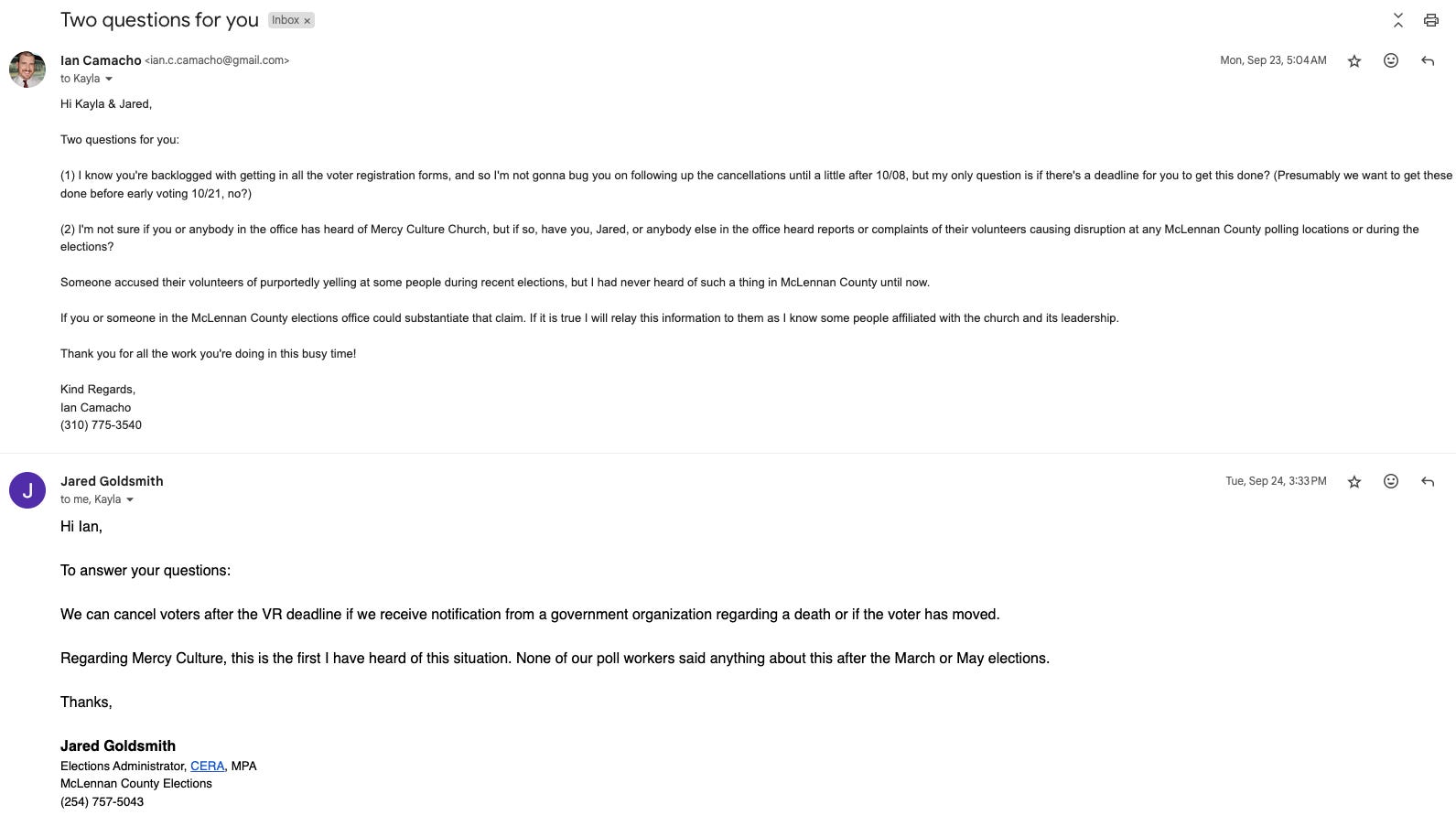
Tellingly, I never got told any bad information about Mercy Culture from this person who said they’d share it. You’d think if there were problems there’d be complaints given all these potential witnesses and specifics they could give me. But this only confirmed my suspicions that this claim was bullshit and that the person was either sharing or likely originating gossip.
I recalled seeing something similar in McLennan from a political candidate. Democrat candidate for County Commissioner Precinct 2 Jeremy Davis (whom I’ve previously reported on for being dishonest) is fear-mongering that McLennan County purged 7,000 people from his precinct.
The subtext in his video and posts are that both Texas and McLennan County targeted blacks and Hispanics with “muh voter suppression.”
Except, there’s no supporting data for this at all.
His Facebook page claim, as you see below, is murky. Were 7,000 removed from McLennan County? Or from Precinct 2 alone?

In the rest of his video, and his answer to me on the right, Davis makes it clear he’s talking about Precinct 2, but let’s check if either situation is true.
Since he mentioned the McLennan County Election Office was where he got his data in his answer, I went to the source.
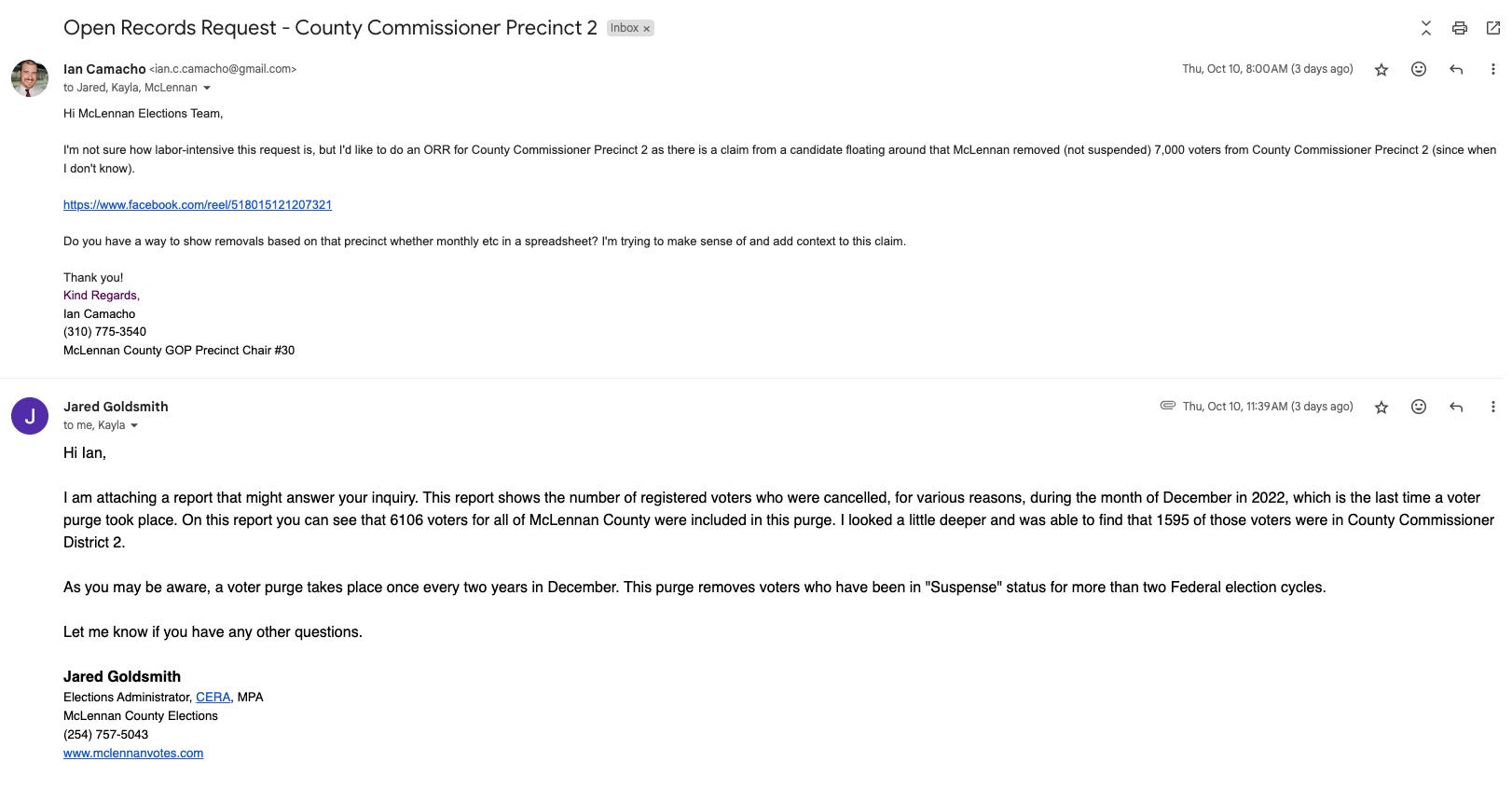
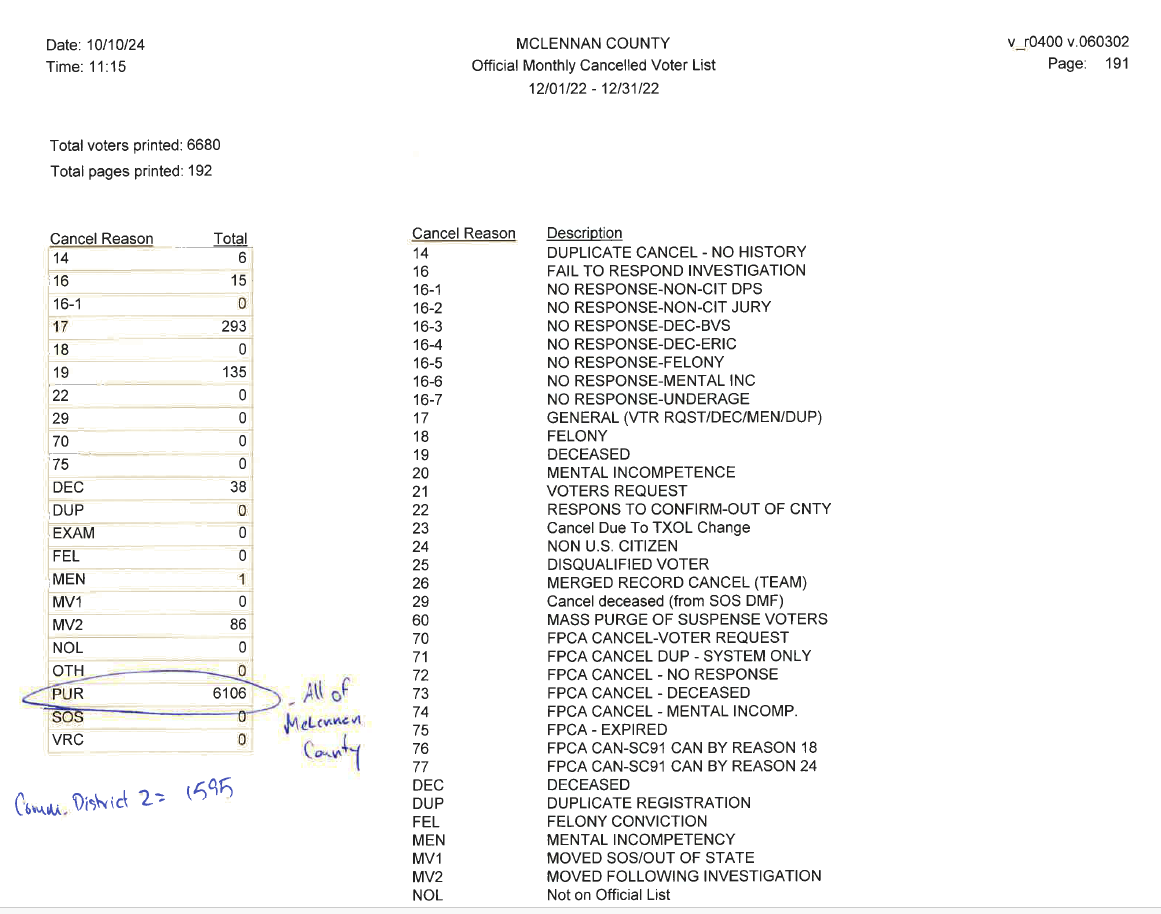
I’m still checking to see if there are anywhere close to 7,000 people removed from Precinct 2 in a “purge” or some other version of this after 2022 – even though it’s only done every December after a general election – but so far nothing supports that.
Even if there were 7,000 removed in Precinct 2, what about the other 3 precincts?
Did these purportedly whiter precincts have disparities in voter removals? If so, out goes that race-baiting theory.
Honestly, it’s not up to me to prove Davis right. I gave him a chance to answer and he gave me a politician non-answer.
Since he claims the data came from the SOS and the County Elections Administrator, he should provide his data since he’s got the burden of proof. He didn’t expect me to check I assume.
Here are the cancelation trend reports for each month in Texas counties, by the way.
It doesn’t break it down by commissioner precinct though so I don’t know where or how he got his data – unless “out of his ass” is now considered a reputable source.
So far it looks like this is another disprovable lie from Mr. Davis, and he’s developing a reputation in McLennan County as being quite deceptive in his campaigning.
That’s what I meant about the integrity part earlier: once you are caught telling falsehoods and misrepresentations, it becomes harder for people to believe you.
It’s why I didn’t rely on our Elections Administrator’s statement but checked the data.
I posted recently about the dangers of taking something at face value without checking and that took maybe 15 minutes to disprove, but unfortunately, it’s something I see too many do.
Unfortunately, some people copy Wikipedia and use that as a reliable source. The only problem is Wikipedia itself says it’s not a reliable source. I mean, you can edit it and change things if you have an account, it’s not that hard.
Sure, use it as a launch pad to go to the articles and then go to source links within (if provided), but too many people say, “Well, Google/Wikipedia/a headline/expert/some guy says this!”
But those aren’t primary sources, nor is that even basic research 101. It’s lazy.
Nor is saying that you have a bunch of degrees, certificates, or diplomas. That’s when you know they’re insecure in their knowledge because it’s a hard appeal to authority.
Here’s an exchange when someone tried this crap, and the backpedaling and triggering is great.
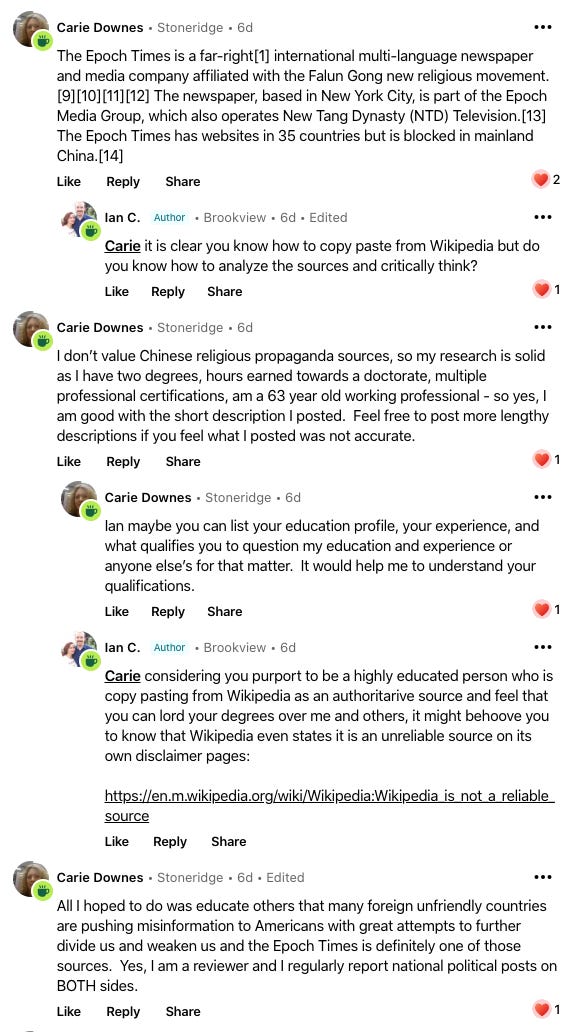
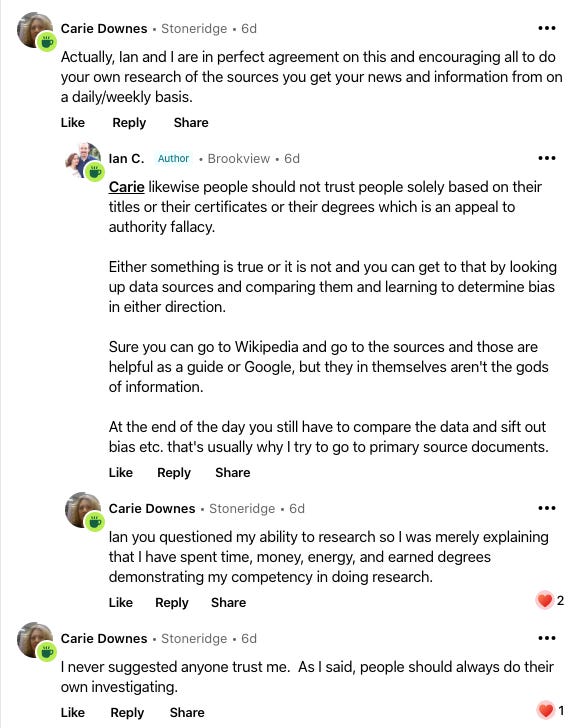
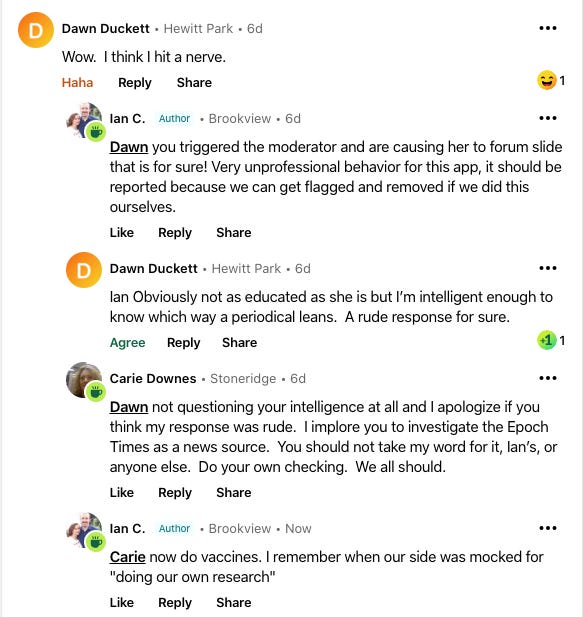
All this is my way of saying look up sources where they get their data sources from.
Look up conflicting information from news sources you don’t agree with and see what one side isn’t giving you. Otherwise, you’re leaving yourself to being taken advantage of by people who prey on your ignorance to stir up your emotions, sell you anti-anxiety medication, and leave you worse off.
Unlike them, this blog is free, but you’re welcome to support it with a like, share, or a paid subscription if you like the content. You can also consider going through this referral link as it will help to support this Substack, and it doesn’t cost you a dime. That way it’s a win-win for everyone.